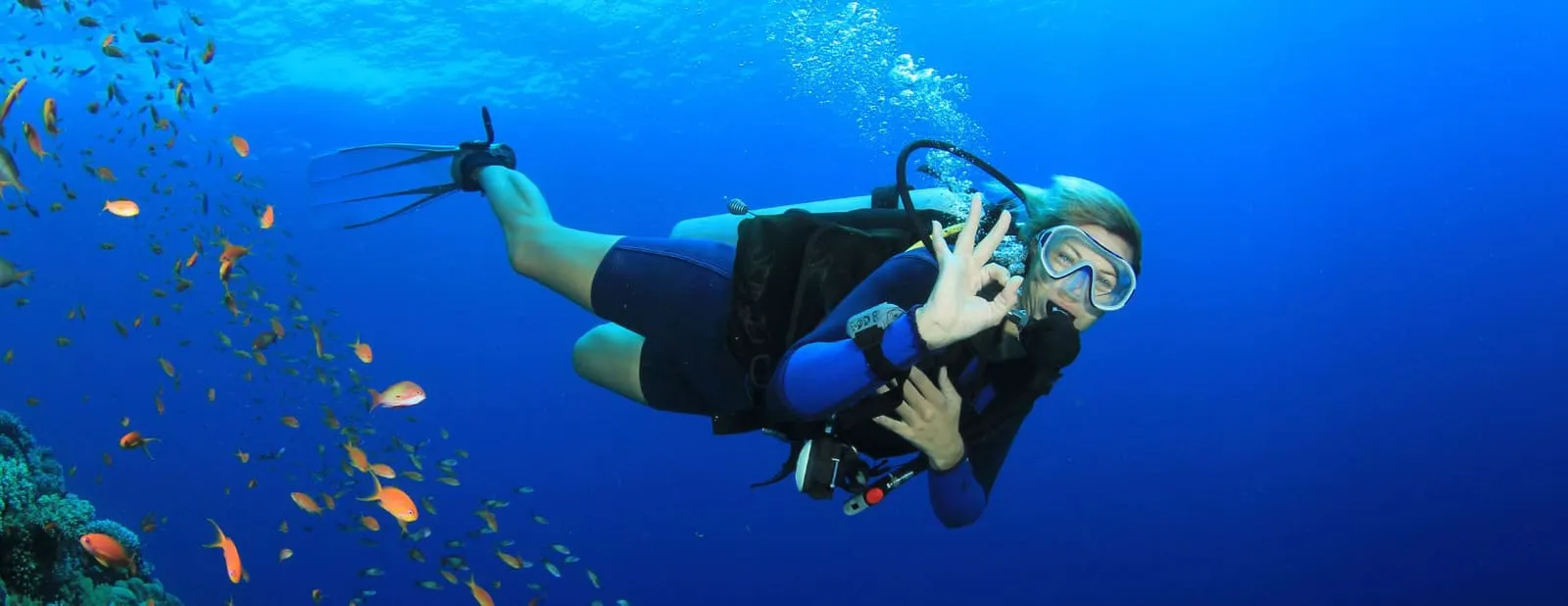
Wreck divers talk about Subic the way birders talk about a migration route. Over twenty identified wrecks — ships, aircraft and military vehicles — sit inside one bay, spanning the Spanish–American War to the Vietnam era.
The reason they are all still there, and still relatively intact, is the same reason the forest survived: the US Navy controlled the water and banned non-military diving until 1991. The bay was effectively sealed for the better part of a century.
The wrecks worth knowing
Four wrecks account for most of the recreational diving in the bay. The rest range from shallow landing craft to technical and trimix sites well beyond sport depth.
San Quentin — the oldest, 1898
- Depth
- 10–16 m
- Level
- Open water
- Sunk
- 1898, scuttled deliberately
The bay’s oldest wreck was sunk on purpose, scuttled during the Spanish–American War to block the channel at the bay entrance. It has spent more than a century becoming a reef — soft corals, sponges, crinoids and a nudibranch population divers put at more than twenty species.
USS New York — the famous one
- Depth
- 16–32 m
- Level
- Advanced; clearance required
- Length
- ~110 m
An armoured cruiser launched in 1891 — a sister ship to the USS Maine, whose sinking started the Spanish–American War — later renamed the Saratoga and then the Rochester, and scuttled by the US Navy in 1941 to keep her four eight-inch guns out of Japanese hands.
She lies on her port side with guns and propeller still in place. Because she sits in a shipping lane, diving her requires advance clearance from the harbour authority, arranged through a licensed operator.
El Capitan — the workhorse
- Depth
- 4–22 m
- Level
- Novice wreck divers upward
- Length
- ~80 m
The most-dived wreck in the bay started life in 1919 and served as the USS Majaba. She was torpedoed near Guadalcanal in 1942, survived it, and eventually sank at anchor in Ilanin Bay while waiting to be returned to her owners.
Lying on her port side with the starboard rail only four metres down, she is shallow enough to be the bay’s standard introduction to wreck diving and intact enough to stay interesting for people who have done a lot of them.
USS Lanikai — the strangest career
Built as a yacht in 1914, she served as a US Navy patrol vessel in the First World War, was chartered by MGM as a film company yacht — she appears in the 1937 picture The Hurricane — and was then pressed into service as a Second World War intelligence vessel, making an eighty-two-day escape from the Philippines to Australia.
A typhoon sank her in 1947. She was rediscovered in Nabasan Bay in 2003, and artifacts from her are displayed locally.
The Oryoku Maru, and why we stop here
The wreck most often asked about is the Oryoku Maru, a Japanese transport carrying 1,620 American and British prisoners of war when US aircraft bombed and sank her close to shore near Alava Pier on 15 December 1944. More than three hundred prisoners died in the transit and the sinking. The Hell Ship Memorial on the waterfront commemorates them.
How diving here actually works
Several sites sit in or near working shipping lanes and need harbour-authority clearance, so divers book through licensed operators inside the Freeport rather than going independently. That is the practical constraint that shapes a Subic dive trip.
- El Capitan and the landing craft in Triboa Bay are accessible to newly certified wreck divers.
- The USS New York needs advance clearance and an advanced ticket.
- The deeper aircraft and the Banshu Maru at 54 m are technical dives; the deepest sites need trimix.
- November to May is the reliable season — wet-season visibility drops and outer-bay sites can close in rough weather.
One piece of long-standing local lore is worth correcting: the LST wreck was known for resident bull sharks, but none have been sighted since 2010.
Before you dive here
Common questions
How many wrecks are there in Subic Bay?
Over twenty historic ship, aircraft and vehicle wrecks have been identified in the bay, spanning the Spanish–American War of 1898 to the Vietnam era. It is one of the densest concentrations of historic wrecks anywhere within sport-diving range.
Do you need a licence to dive the wrecks in Subic Bay?
You need certification appropriate to the site, and you need to book through a licensed operator inside the Freeport. Several wrecks sit in or near working shipping lanes and require advance clearance from the harbour authority, which operators arrange.
Can you dive the Oryoku Maru?
We cannot tell you. It is a war grave, and our sources conflict — dive operators describe it as diveable while other accounts say it is permanently closed on war-grave grounds. We have not resolved this with the harbour authority, so ask SBMA and a licensed operator directly.
Is there a recompression chamber in Subic Bay?
We could not confirm one inside the Freeport, and could not establish reliable in-bay hyperbaric access. Reported options sit outside the zone with unverified operational status, and the nearest dependable facility is several hours away by road. Settle evacuation arrangements with your operator and insurer before diving.
What is the best wreck for a first-time wreck diver?
El Capitan, the former USS Majaba. She lies on her port side in 4 to 22 metres with the starboard rail only four metres down, which makes her the bay’s standard introduction to wreck diving.
Sources
Every factual claim above traces to one of these. Where sources disagree — or where we could not confirm something — the piece says so rather than choosing the tidier version.