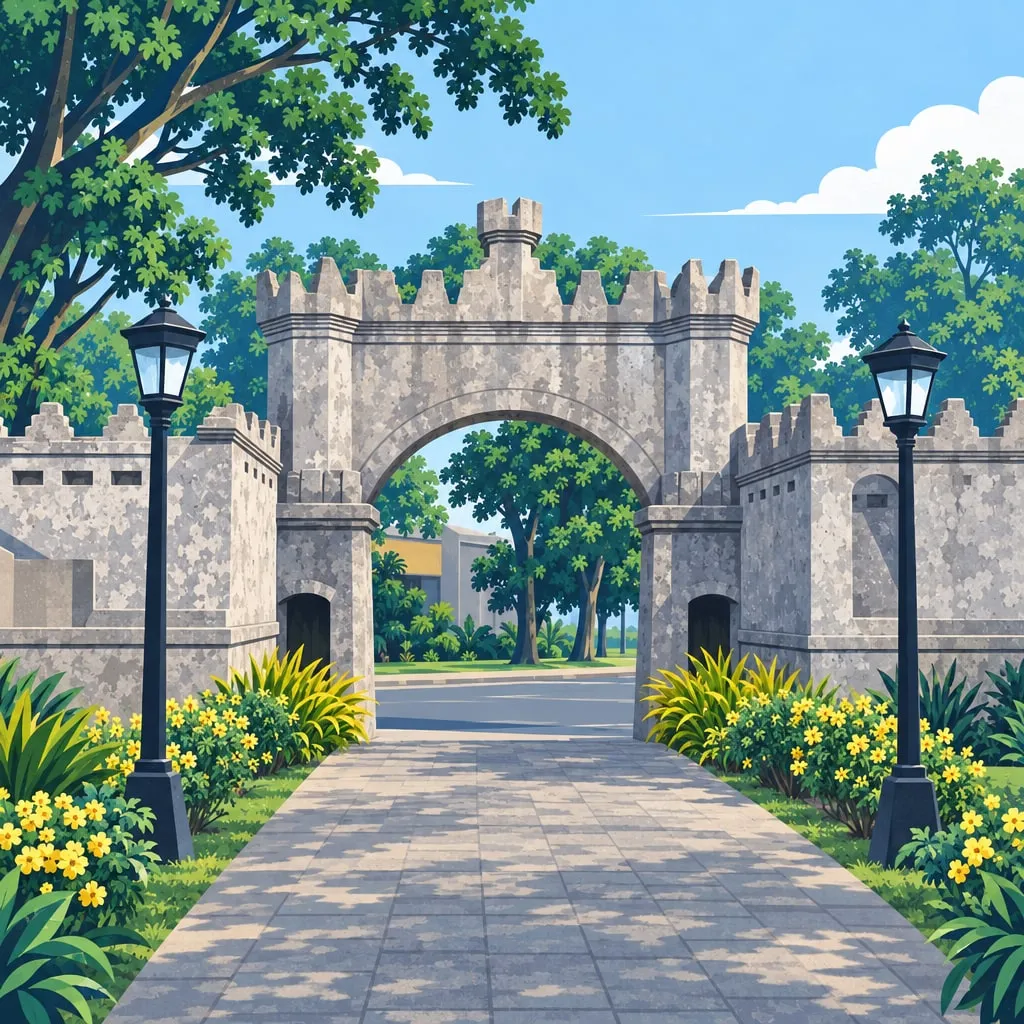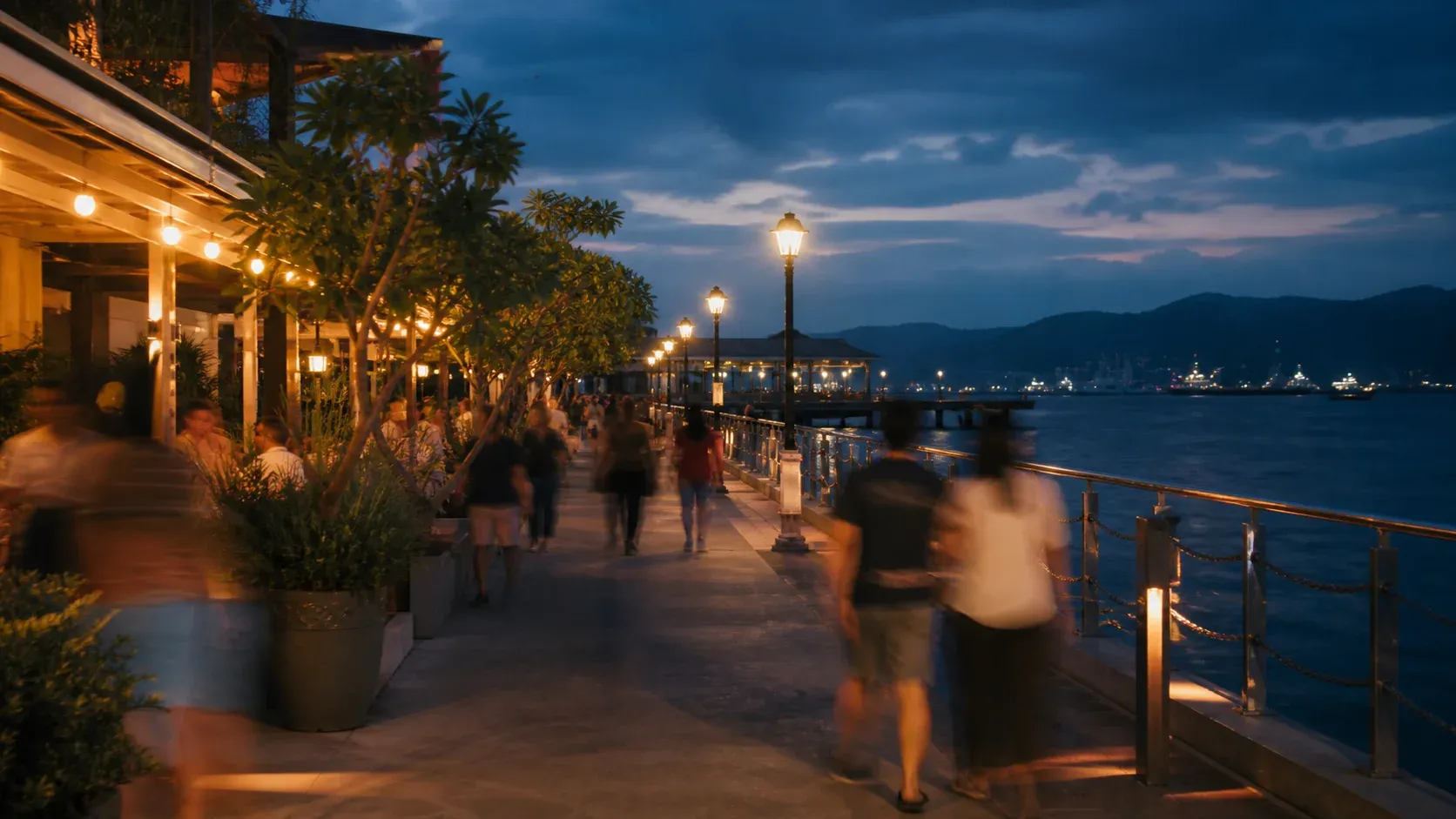
Ask for directions in Subic and someone will tell you the café is “in SBMA”. The shorthand is fair, because the Subic Bay Metropolitan Authority writes the rules, runs the port, polices the roads and licenses the businesses inside the fence.
This article explains what the Authority is, how it came to exist, what it does day to day, and where a visitor meets it. It leaves the founding story to The eight thousand who kept Subic Bay and the driving rules to the Freeport rules visitors get caught by, rather than repeating them.
What is SBMA?
SBMA is the Subic Bay Metropolitan Authority, the government body that develops and manages the Subic Bay Freeport Zone (SBFZ). Its own history page calls it the operating and implementing arm of the Government of the Philippines for turning the Freeport into a self-sustaining tourism, industrial, commercial, financial and investment centre.
The Authority’s head office is at Bldg. 229, Waterfront Road, inside the Freeport. That is the bayside strip of the Central Business District, the same road where the ferry to Grande Island picks up.
In practice SBMA behaves like a municipal government for the zone. Its published telephone directory, dated July 2023, lists its own Law Enforcement, Fire, Public Health and Safety, Ecology and Tourism departments, plus the seaport and the airport.
What is Republic Act 7227?
Republic Act 7227, the Bases Conversion and Development Act of 1992, is the law that created SBMA. Congress passed it on 13 March 1992, and Section 13 converted the Subic Bay Naval Base into the Subic Special Economic and Freeport Zone and established the Authority to run it.
The law also gave the zone its freeport character: businesses registered with SBMA receive tax and duty-free privileges and incentives, on a model drawn from Hong Kong and Singapore. RA 7227 was later amended by Republic Act 9400.
Under the implementing rules, SBMA exercises authority and jurisdiction over all economic activity in the zone, and may assess administrative fees and impose administrative fines for violations of its rules. That legal footing is why the Freeport has rules of its own, set out in the article on Freeport rules.
Who runs SBMA now?
An SBMA news item dated 4 March 2026 names Eduardo Jose L. Aliño as Chairman and Administrator. The Authority’s own “Brief History” page has not caught up: its leadership timeline ends with Rolen C. Paulino in 2022.
Appointments change with the national government, so treat any name as dated. The Board of Directors page on mysubicbay.com.ph is the place to check who holds the post when you read this.
What does SBMA do for a visitor?
For a visitor, SBMA is the owner of the road you drive on, the authority behind the gate, and the body whose rules apply once you are inside. Most of what is distinctive about a stay in the Freeport traces back to it.
- Gates and customs. The Freeport is a separate customs territory, and a 2024 travel blog describes vehicles passing a customs booth on the drive in. The same blog says pedestrians usually enter through the SBFZ Main Gate. Visitors do not need ID to enter, since gate ID checks are for people who work in the Freeport, but the fee position is unconfirmed, as the rules article explains.
- Traffic and conduct. SBMA’s own enforcers police the roads, and its board has policies on plastic and vaping. The rules article covers the first-to-stop intersection rule and what could not be confirmed.
- Duty-free. Sales of tax and duty-free consumer items inside the secured area are limited to authorised shops, regulated jointly by the Bureau of Customs and SBMA. See duty-free shopping in Subic.
- Conservation. SBMA’s Ecology Department looks after the forest and mangroves inside the fence, which is why tree cutting needs a permit under a board resolution.
- Tourism. SBMA’s Tourism Department runs the official visitor site, Funtastic Subic Bay, and its July 2023 directory lists the department at the SBECC on Efficiency Street, Subic Bay Gateway Park. Check the current location and contact details before you go.
The Authority also publishes policies, a citizen’s charter and a directory on mysubicbay.com.ph. Its “how to reach us” pages hold the current contact lists, and we do not reproduce phone numbers here because they change.
What is the difference between SBMA, the Freeport and Olongapo?
The Authority is the governing body, the Subic Bay Freeport Zone is the territory it governs, and Olongapo City is a separate city outside the gates. Locals and searchers use the Authority’s initials for the territory, so a beach or a restaurant “in SBMA” means one inside the Freeport.
According to Wikipedia, the zone straddles four local government units across two provinces: Olongapo City and the town of Subic in Zambales, and Hermosa and Morong in Bataan. SBMA’s investment site gives about 670 square kilometres for the whole Freeport, while Wikipedia puts the secured and fenced part, the area most visitors mean, at about 14,000 hectares. The Freeport’s districts, explained shows how it divides.
Google Maps often files Freeport addresses under Olongapo, which is a labelling habit and not a statement about who governs the place.
How big is the Freeport as an economy?
The Freeport workforce totalled 171,653 in 2025, employed by 4,744 companies, according to an SBMA Labor Department report published on 4 March 2026. That was up 4.4 percent on 2024.
In the same report, services were the largest employer at 67.32 percent of the workforce, and Olongapo City supplied the most workers, 70,769. For a visitor the number is a reminder that the Freeport is a place where a large number of people work, not just a resort district.
Where can you see this history on the ground?
The clearest trace of the base is the former Naval Air Station Cubi Point, which is now Subic Bay International Airport. It was built in the 1950s and has its own page among our heritage listings.
The rest is in the layout: the wide roads, the American street names, the fence and the gates. Both the history and the rules are easier to read once you know that SBMA inherited the base rather than building a town from nothing. The heritage day guide turns the surviving base into a day’s route.
Common questions
What does SBMA stand for?
SBMA stands for the Subic Bay Metropolitan Authority, the government body created by Republic Act 7227 in 1992 to develop and manage the Subic Bay Freeport Zone. Many people also use “SBMA” as shorthand for the Freeport itself.
When was SBMA created?
The law that created it, Republic Act 7227, was passed on 13 March 1992. Section 13 converted the Subic Bay Naval Base into the Subic Special Economic and Freeport Zone and established SBMA. The last US ship left on 24 November 1992.
Who is the head of SBMA?
An SBMA news item dated 4 March 2026 names Eduardo Jose L. Aliño as Chairman and Administrator. The Authority’s own history page still ends its leadership list in 2022, so check the Board of Directors page on mysubicbay.com.ph for the current post-holder.
Where is the SBMA office?
SBMA’s head office is at Bldg. 229, Waterfront Road, Subic Bay Freeport Zone, according to the footer of its website. Its Tourism Department is listed in the SBMA directory at the SBECC, Efficiency Street, Subic Bay Gateway Park; confirm before visiting.
Is SBMA the same as Subic Bay Freeport Zone?
No. SBMA is the authority and the Subic Bay Freeport Zone is the territory it manages. In everyday speech people use “SBMA” for the Freeport, as in “restaurants in SBMA”, but the two are different things.
Is Subic Bay Freeport part of Olongapo City?
No. The Freeport is administered by SBMA. Olongapo City is a separate city outside the gates. Wikipedia describes the zone as straddling four local government units, Olongapo City and Subic in Zambales and Hermosa and Morong in Bataan.
Sources
- SBMA — Brief History (RA 7227, first chairman, volunteers, investors, APEC 1996)
- SBMA news, 4 March 2026 — Subic 2025 workforce pegged at 170K-strong; up by 4.4% (names the Chairman and Administrator)
- SBMA — Where we are (head office address, Bldg. 229 Waterfront Road)
- SBMA — Telephone Directory (PDF, dated 18 July 2023)
- SBMA Regulatory Group — Procedures on the Imposition of Fines and Penalties (PDF; authority, RA 9400 amendment)
- SBMA Invest — Major Districts
- jur.ph — summary of EO 97-A and related issuances on the tax and duty-free privilege in the Subic zone
- Philippine Beach Guide — How to get to Subic (customs booth, Main Gate), updated 22 Aug 2024, travel blog
- SBMA Policies and Guides — Regulatory (board resolutions)
- Wikipedia — Subic Bay Freeport Zone
- Proclamation No. 532, s. 1995 (zone boundaries), Official Gazette